
Amanda V.✓ Verified customer
★★★★★
Great for Everyday Chefs
I cook daily, and Katori has been the best upgrade for our kitchen. It's light, easy to clean, and I love that it doesn't warp or get stained like my old plastic/wooden boards.
 Kitchen & Health
I thought I was being careful about what my kids eat. Turns out the most dangerous thing in my kitchen wasn't in the fridge — it was the board I chopped their dinner on every single night.

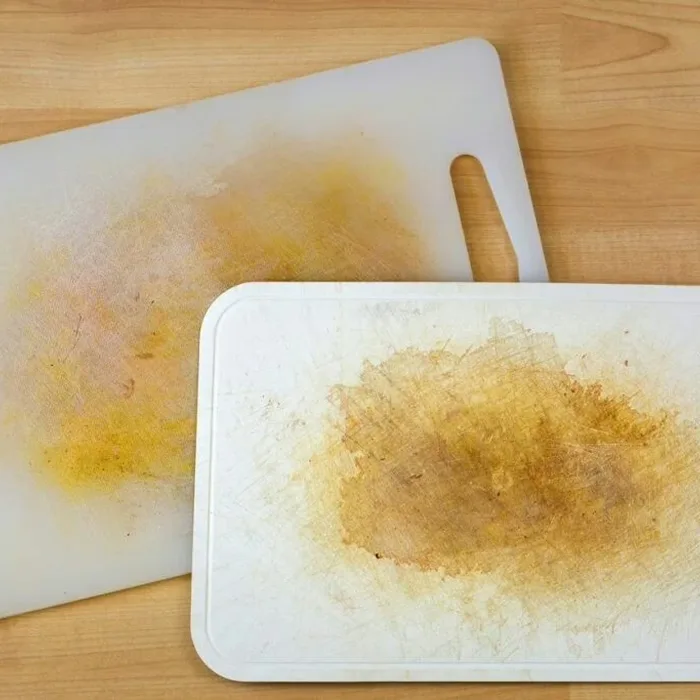
It started with a headline I almost scrolled past. A team of researchers at North Dakota State University had measured how much plastic a regular cutting board sheds while you chop. I expected "a little." I did not expect this:
Seventy-nine million. Not in a landfill — in the food. In the carrots I cut into sticks for my daughter's lunchbox. In the chicken I diced for tacos. Every knife stroke carving out another few thousand fragments too small to see.
And microplastics don't just pass through. In the last two years scientists have found them in human blood, in placentas, in arteries — and in 2025, a study in Nature Medicine found them accumulating in human brain tissue at levels far higher than a decade earlier. Nobody can yet say exactly what that does to us. I decided I didn't want to be part of the experiment.
I pulled out the bamboo board we'd gotten as a wedding gift. Then I flipped it over.
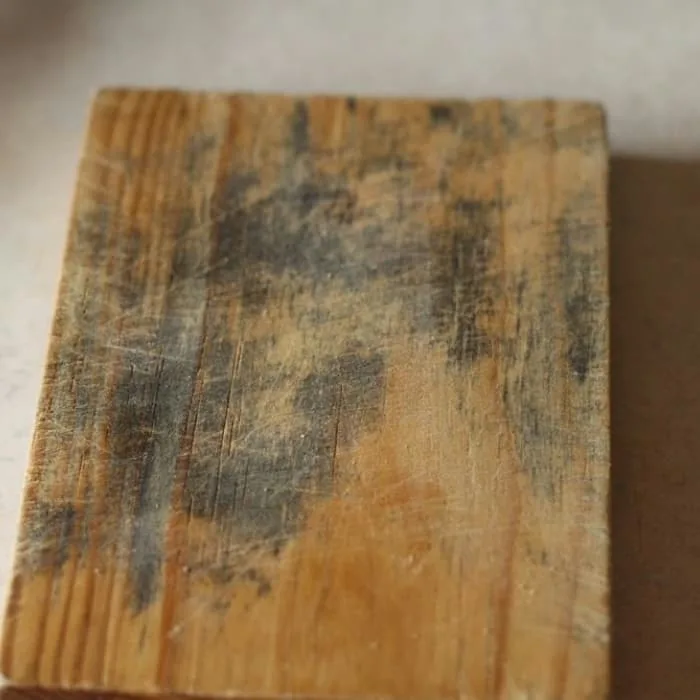
Wood is porous. Raw chicken juice soaks into the grain and stays there — the USDA recommends replacing wooden boards once they're grooved for exactly this reason. Mold grows from the inside. You can't bleach it out without destroying the board. I'd been "washing" a sponge full of bacteria and calling it clean.
Glass? Ruins your knives in a week. Steel? Same problem, plus it's loud and heavy. I was genuinely stuck. Every option was either plastic in the food, bacteria in the wood, or dull knives.
Yuki grew up in Osaka, and her family has used a titanium board for years. It made sense the moment she explained it: titanium is the metal they make surgical implants and pacemaker cases out of. It's non-porous — nothing soaks in, so nothing grows. It doesn't shed — there's no plastic to shed. And unlike glass or steel, pure-grade titanium is just soft enough that a knife edge glides over it instead of chipping against it.
She sent me a link to a board called Katori. 99.89% pure titanium, laser-cut, double-sided, with an independent SGS lab report posted right on the product page. I ordered one that night, half expecting a gimmick.
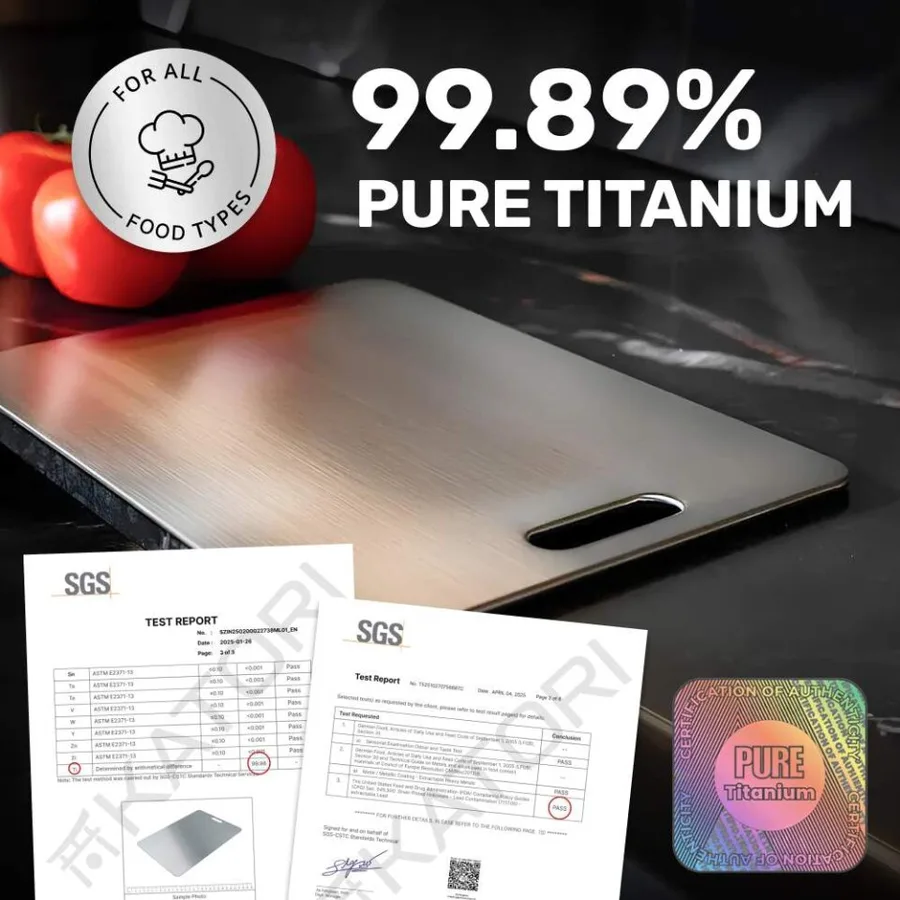
Day 1. It's lighter than I expected — about the weight of a hardcover book — and thin enough to slide into the drawer where my plastic boards used to live. 11.4 × 7.9 inches, so it fits a full chicken breast with room to spare.
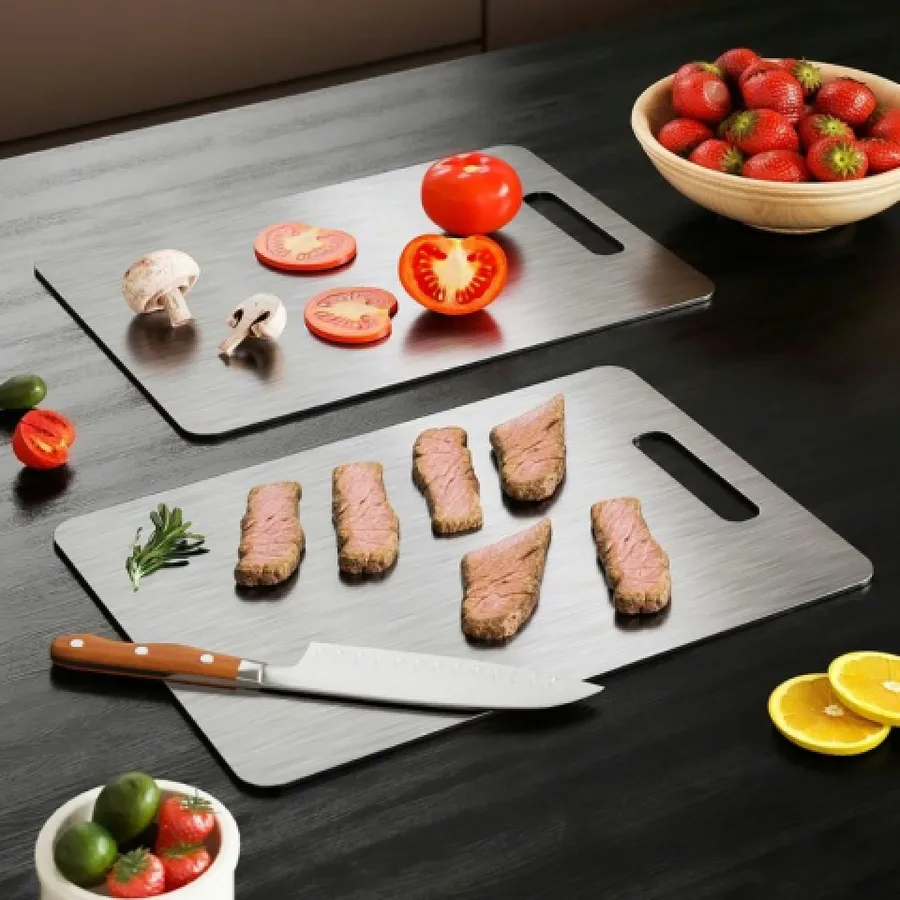
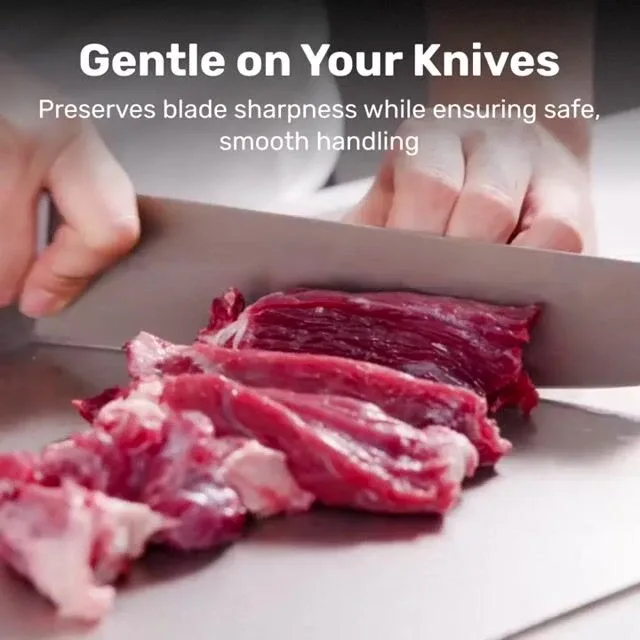
Day 2. The knife test. I was braced for that screechy glass-board feeling. Instead it was quiet, and my Victorinox slid through onions like it does on wood. After a week of daily use, the edge is still exactly as sharp as when I started — I checked with a sheet of paper.
Day 3. Garlic, then strawberries, five minutes apart. On plastic this is how you get garlic-flavored strawberries. On titanium: rinse, wipe, done. No smell. No pink stain. Nothing.
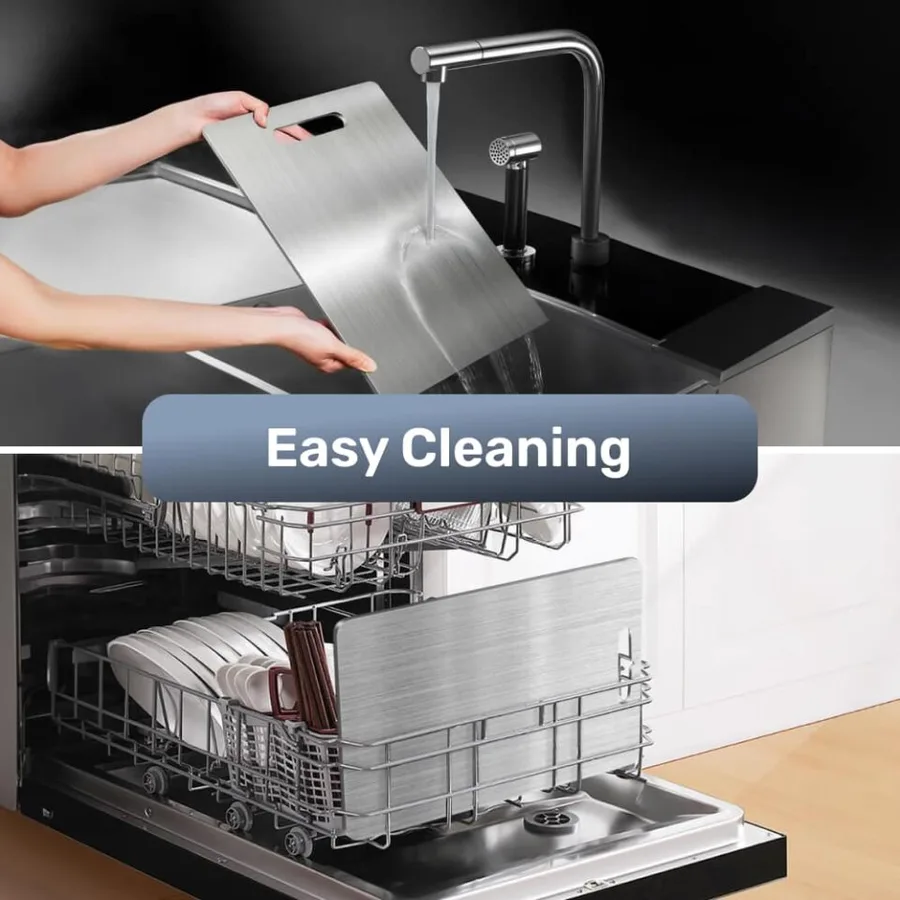
Day 5. I did the thing you're not supposed to do and put it through the dishwasher. Came out looking brand new. No warping, no cloudy film.
Day 7. My husband — who laughed at "a metal cutting board" — took it to the grill, used it as a prep surface and a serving tray, and announced we need a second one for the camper.
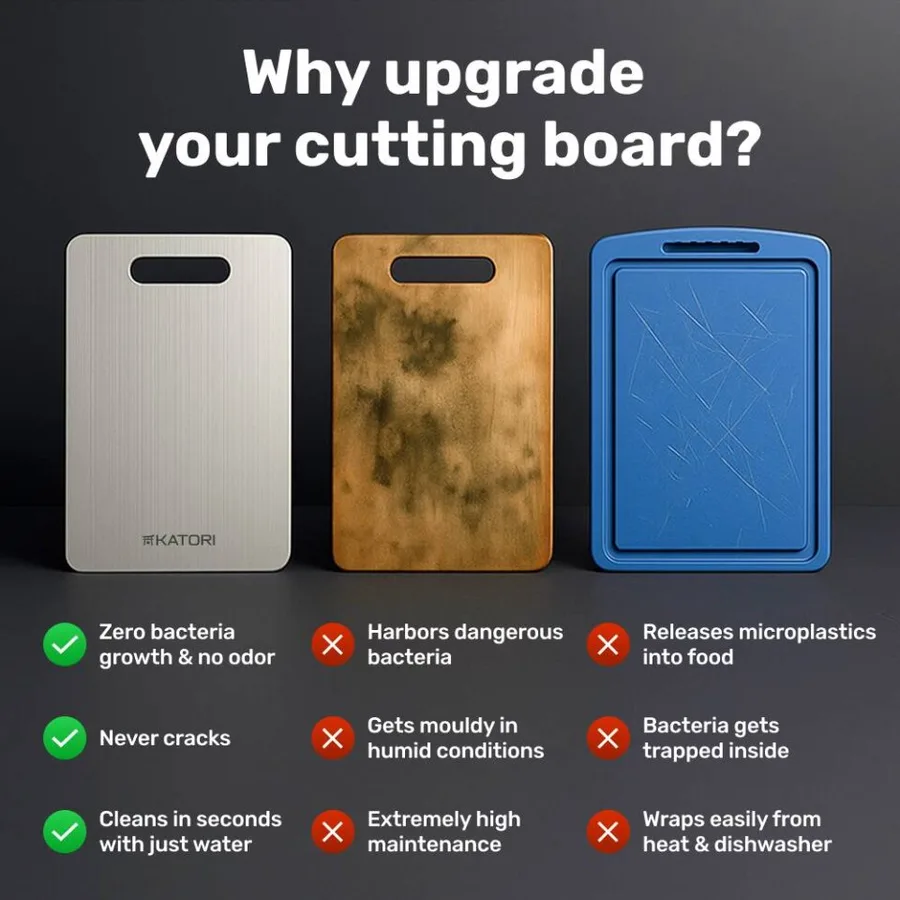
| Katori Titanium | Plastic | Wood / Bamboo | Glass / Steel | |
|---|---|---|---|---|
| Microplastics in food | None | Up to 79M/yr | None | None |
| Harbors bacteria / mold | No | In grooves | In the grain | No |
| Absorbs odors & stains | No | Yes | Yes | No |
| Dishwasher safe | Yes | Warps | No | Yes |
| Kind to knife edges | Yes | Yes | Yes | Dulls fast |
| Typical lifespan | Lifetime | ~1 year | 2–3 years | Until dropped |
| Weight | Light | Light | Heavy | Heavy |
I cook daily, and Katori has been the best upgrade for our kitchen. It's light, easy to clean, and I love that it doesn't warp or get stained like my old plastic/wooden boards.

Didn't think it was actually gonna be this good but this cutting board has truly preserved my knives. I've been using it for months, and my blades are as sharp as ever.

After learning how much bacteria plastic boards can trap, I made the switch to Katori. I feel so much better knowing I'm preparing food on a hygienic surface. Plus, it's so easy to wash.

The most convenient for camping, can use it as a cutting board or just a surface to put stuff on. The best part is obviously not having to scrape it while cleaning.

The double-sided design is brilliant… I use one side for meat and the other for veggies. It makes meal prep faster and so much safer. Highly recommend it y'all!

I run a small catering business, and Katori has been awesome for keeping things efficient and clean. It doesn't stain, doesn't smell, and it's tough enough to handle constant use.

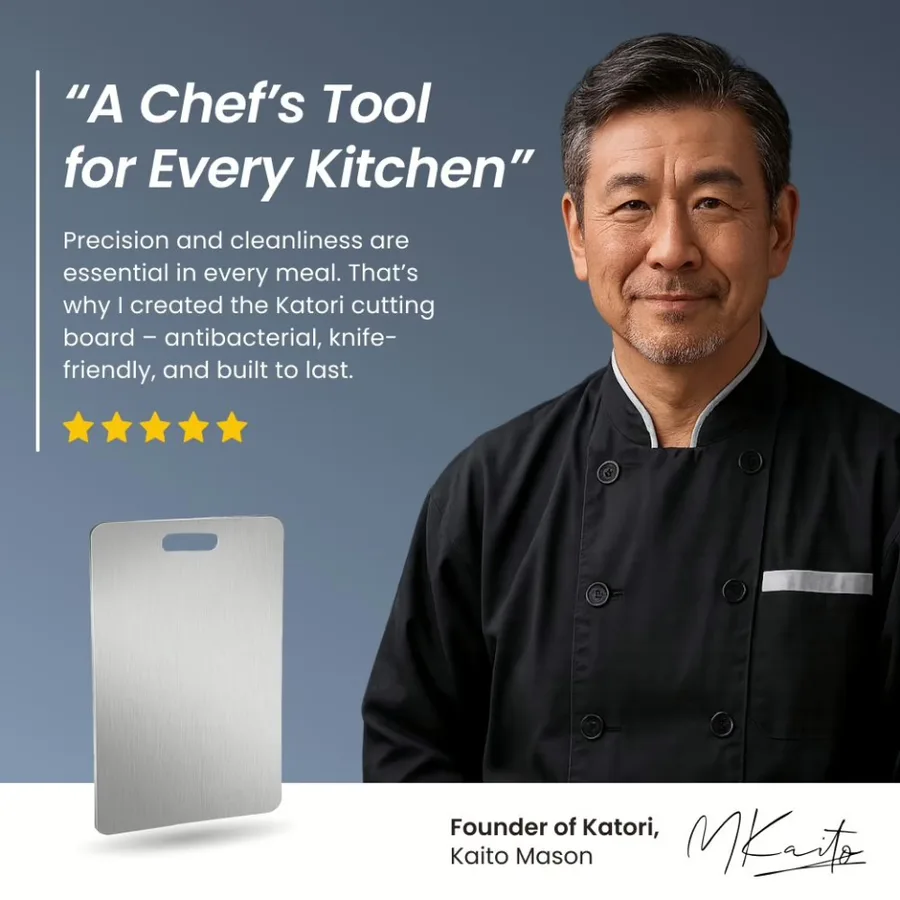
Precision and cleanliness are essential in every meal. That's why I created the Katori board — antibacterial, knife-friendly, and built to last.Kaito Mason — Founder of Katori, culinary coach, 20 years as a Japanese-cuisine chef
Here is the part that surprised me. Titanium boards from kitchen-supply brands cost several times what Katori asks, because Katori sells direct and skips the retail markup. Right now they are running holiday pricing, and the per-board price drops the more you add — I went back for two more: one for the camper, one as a Christmas gift for my mom.
Katori sells direct through its official order page. Pick a single board or a multi-board bundle there — the per-board price drops with every board you add, and the holiday pricing is applied automatically.
You'll choose your package and see current pricing on the official order page.
Fair question — I asked it too. Katori sells direct to consumers instead of through retailers, which is where most of the markup disappears. The board is backed by a 30-day refund policy and processes payments through a standard encrypted checkout (Visa, Mastercard, Amex, PayPal). The SGS lab report on purity is published on their site.
Solid, 99.89% pure titanium — not a coating over steel or aluminum. The independent SGS test report is shown above. There's nothing to flake off and nothing to leach.
No. Pure titanium is noticeably softer than hardened knife steel, so the edge rides on the surface rather than chipping against it. It's gentler than glass, ceramic, stone or stainless steel. Like any hard board, it's harder than end-grain wood — if you use very thin Japanese blades, you'll notice they stay sharp but may need the occasional hone, as with any board.
The surface has a fine brushed texture, so it grips more than you'd expect. Wet food behaves the same as on any plastic board. For heavy chopping I put a damp towel underneath, same as I always did.
Yes to both. Titanium doesn't warp, rust or discolor at dishwasher temperatures, and it tolerates heat well enough to double as a trivet. For everyday use, a rinse with warm water and a wipe is all it needs.
11.4 × 7.9 inches (29 × 20 cm). It's thin and light — comparable to a hardcover book — which is why it works so well for camping and grilling.
Orders ship from a US warehouse within 24 hours, and most arrive in 3–7 business days. You'll get a tracking number by email.
You have 30 days from delivery to return it for a full refund. Contact support, they send a label, you send it back. That's it.
I spent years buying "the good" plastic boards, scrubbing the grooves and telling myself it was fine. It wasn't fine — it was 79 million pieces of plastic a year that I was serving my family without knowing it. For the price of a couple of those boards, I now have one that doesn't shed, doesn't rot, doesn't stink, and will outlast my kitchen.
If you've read this far, you already know you're going to check. Go check while the Black Friday pricing is still live.